Bitch Why You Not a Hobbit Again
In a series of posts, chosen ask berkun, I write on whatever topics people submit and vote for. This calendar week reader's option: What are your favorite books and why?
These are the first ~45 books that came to mind (here's the listing on goodreads) .
 Henry Miller wrote a book called The Books in My life. I was a fan of his not-fiction writing in the late 1990s (Air Conditioned Nightmare, Black Spring) and when I found this volume it blew my mind. The quantity of books he recalled fluently, and their broad range of genres. inverse how I idea near reading. He crossed subjects, forms, languages, decades… he was, in essence, a kind of gratis-reader. I discovered Celine's Death on the Installment plan from Miller, a book with profound effects – a) the realization some people are both brilliant and miserable b) sentences don't have to stop… Regarding Miller, I'd never seen a writer list more a scattering of favorite books, but Miller'due south book was dumbo and deep, thick with references. I realized it's not merely okay to read widely, but a kind of necessity equally a writer to be well read, as demonstrated by his example. He read lots of obscure books, by not well known writers, which liberated me from the shallow waters of bestseller lists. This post is largely inspired by this book.
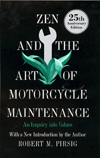 Zen and the Art of Motorcycle Maintenance, By Robert Pirsig. As a warning this is a volume with major problems. It's too long and it meanders in frustrating ways. If I weren't assigned to read it for a freshman year philosophy class, I'd likely never take, and it's non a book I often recommend. Just information technology has it'south potent charms – information technology was the showtime volume of philosophy I'd read that was first person and personal, and it left me with new ways to think about thinking most things and the dangers thinking about thinking can bring (I will always remember gumption traps). For this reason I've returned to the book many times (and read Lila likewise, which I enjoyed but for different reasons). In the same college grade I read Crazy Wisdom, past Wes Nisker, which demonstrated how insane wisdom seems to the unwise (which i was, or nonetheless am). The combination of these two books changed me forever, and ready me on a path paved with the dear of wisdom. I learned wisdom and philosophy could be funny, angry, scary, fulfilling, emptying, and dozens of other things I'd never thought about philosophy earlier.
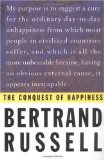 The Conquest of Happiness, Bertrand Russell. Not certain how or when I discovered Russell, simply he's one of my strongest influences. The best writer amongst the philosophers, choosing plain language, passionate charm, and clarity of thought above all else, something few philosophers have the talent, want or courage to practice. He was prolific, with many essay collections, but possibly almost memorable among them is his Why I am Not Christian. He is i of my heroes for many reasons, but with this volume it was for his willingness to country what he believed despite the consequences. Conquest of Happiness is a very giddy title, it's similar "how to force the boy/girl of your dreams to love you lot" or something – the title, but not the book, suggests a self-defeating strategy. But the book has saved me in times of depression, and was a key reading while I was figuring out how to quit my chore.
The Consolations of Philosophy by Alain DeBotton is in the same Russellian category for its charmingly written take on the basics of wisdom. Information technology's often the first book of philosophy I recommend to people. In the aforementioned line is Leo Buscalia'south Living, Loving and Learning, a book recommended to me while drinking with a greek man I met in the youth hostel near Bannf. Between shots of whiskey, I asked for the book he idea I needed to read and that'south what he wrote down. And he was right. The book taught me that love is mettlesome, and well-nigh people are agape of expressing their beloved, which explains in part why many people are sad. In the same pile belongs An Intimate History of Humanity past Zeldin, which made me rethink what a book was, and demonstrated affiliate titles don't take to be so tiresome all the time.
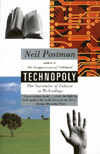 Technopoly, By Neil Postman. If yous're wise, you read challenging books. You'll be uncomfortable, but it's the only way to learn. This is the book I wish every technology lover, developer, startup founder and tech VP would read. Postman'southward Amusing ourselves to death should come with every idiot box, past law. His books made me realize my lust for using and making engineering could not achieve many of the things I wanted out of life. It led me to books like Information Anxiety, The end of patience and Data Smog By Shenk, and on down the line through an honest view of what technology can and tin not do. A design student I was on a project team with at CMU got me hooked on Postman, and I'one thousand in his debt. Without Postman I'd likely notwithstanding be working managing software development, and I'd never have become a writer.
 I didn't read much from age 8 to eighteen (curiously I've read voraciously before and after this period – I blame girls and sports) and A Separate Peace, past John Knowles was likely the offset novel I that moved me. I hadn't felt anything that personal in a book before. Non sure what course it was, probably early on high school, only in that experience was likely one of the seeds that made me eventually want to be a writer. These days I read nearly 90% non-fiction to 10% fiction – most fiction tries way to hard to seem real, and I find it unreadable. Other favorite novels include Slaughterhouse 5, The Life of Pi, Catcher in the Rye, Fahrenheit 451, and The Hobbit. I'thousand also very addicted of George Saunders, and his brusk story collection Pastorallia, short story collections existence a kind of book I typically loathe.
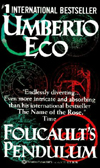
Enders Game, the book everyone at CMU was reading in '92, provided a profound experience similiar to A Separate Peace ("ah ha! now i go the concept of reading for pleasure"), merely for more cognitive reasons. Foucault's Pendulum was the most complicated novel I'd read always in a single sitting in the mid 90s, and I've read information technology more than than once trying to figure out why. Hitchiker's guide to the galaxy was Monty Python in space, and I devoured the series. I read it many times also trying to figure out the machinery. I will e'er remember the endings of Updike'southward Rabbit Run, and Malamud's The Natural, even though I didn't specially savour either book – the later allowed me to detect how any story tin can exist many different stories with just a few surgical changes (e.g. the movie is a different creature).
The Night Country, by Loren Eiseley. I constitute this foreign, scary looking book cover in the science department of a used bookstore in the mid 90s. I picked information technology up and and information technology blew me abroad, considering although it pretended to exist a science book, his magical sense of wonder was unexpected and put me on my heels. I'd go on to read many of his books (The Star Thrower, All The Foreign Hours, The Empyrean of Time… what peachy titles) paying attention to how me fabricated everything seem interesting, mysterious and wonderful simultaneously. I've written about Eisley earlier. He was the starting time essayist I read, and i soon discovered Emerson, devouring his collections (I've read self-reliance a dozen times or more than), and wandering my way towards Montaigne, Thoreau, and other classics.
The Best American Essays series, which has profoundly effected my writing (Why there isn't a best world essays series, I have no idea). These books provide a crash form in the various short non-fiction forms there are, and gave me exposure to different writers, writing on very dissimilar topics, in very unlike styles. I owe a keen debt to this line of books – it was function of my self-directed poor man's artistic writing / English degree.
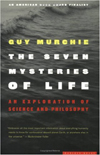 The Seven Mysteries of Life, past Guy Murchie, opened my mind wide. I hadn't had a reading experience that crossed so many lines, and was both brutal and loving, scientific and personal, rational and spiritual, all at the same time. Transformational. I didn't know books could exist similar this. And it had these wonderful line drawings past the author that, dissimilar other books, had a love and soul in them I hadn't seen earlier. A Scientist in the City, past James Trefill. Much of my reading used to be focused on design, design thinking, and building skillful things, since that was a big part of my working life. Trefill was my favorite science writer for a long stretch, and this was my introduction to him. He walks through a metropolis, deconstructing skyscrapers, highways and landscapes from the view of the science mind.
Murchie, Eisley and Trefill all showed me how a keen writer tin reveal a subject more powerfully past carefully including themselves in their descriptions of the world. That it wasn't indulgent if you lot used a careful hand. Stewart Brand'southward How Buildings Learn deserve mention, as he offered a a new style to look at architecture that was fascinating, personal, real and practical, and mostly pretension gratis, something I tin can't say most many books on architecture and blueprint or well-nigh creative pursuits. All these books draw parallels between nature and engineering science, a stiff comparison for many reasons.
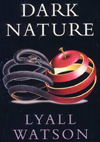 Dark Nature, past Lyall Watson. For many years I read lots of science books, and this was a pivotal one. It explained a scientific view of evil, or rather how in that location actually isn't ane, and how subjective and immature my view of good and evil was. I read The Friction match Principle, by Howard Flower, besides excellent, which doubled the potency. Both books opened up my perception to a new view of nature, i in which nosotros accept invented a organisation of thinking that has very piddling to do with the way the ecosystem of the planet functions. Good and evil, like nearly of our ideas, are inventions, and accept varying levels of accuracy in how they map to the world. To be wise, and enlightened, means deconstructing the ideas I use to map to the world, and realizing not simply how many different ones there are, but that they all, in degrees, inform us about the world.
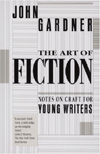 John Gardner's The Art of Fiction is simply the best book on writing ever written (Update: I read it again in 2022 and I had a harder fourth dimension with it). Information technology's barbarous, honest and somewhat cold, only pair it with Bradbury'due south Zen and the fine art of Writing, and you'll have all the passion and inspiration you need. I fundamentally believe expert writing is expert writing – whether it's fiction or non-fiction or something in betwixt your task equally the writer is to become the reader to read the adjacent judgement – that's the whole story.
On a different solar day I'd accept thought of other books, simply these were the starting time that came to mind. I've been influenced by so many things I've read in ways no other media could maybe practice, except perhaps film. And my debt to books like these is part of why it's a honor and a privilege to write, and to be read. I hope to write things that end up on some other writer'south list anytime.
Source: https://scottberkun.com/2010/my-favorite-books/
0 Response to "Bitch Why You Not a Hobbit Again"
Post a Comment